2026 Winners

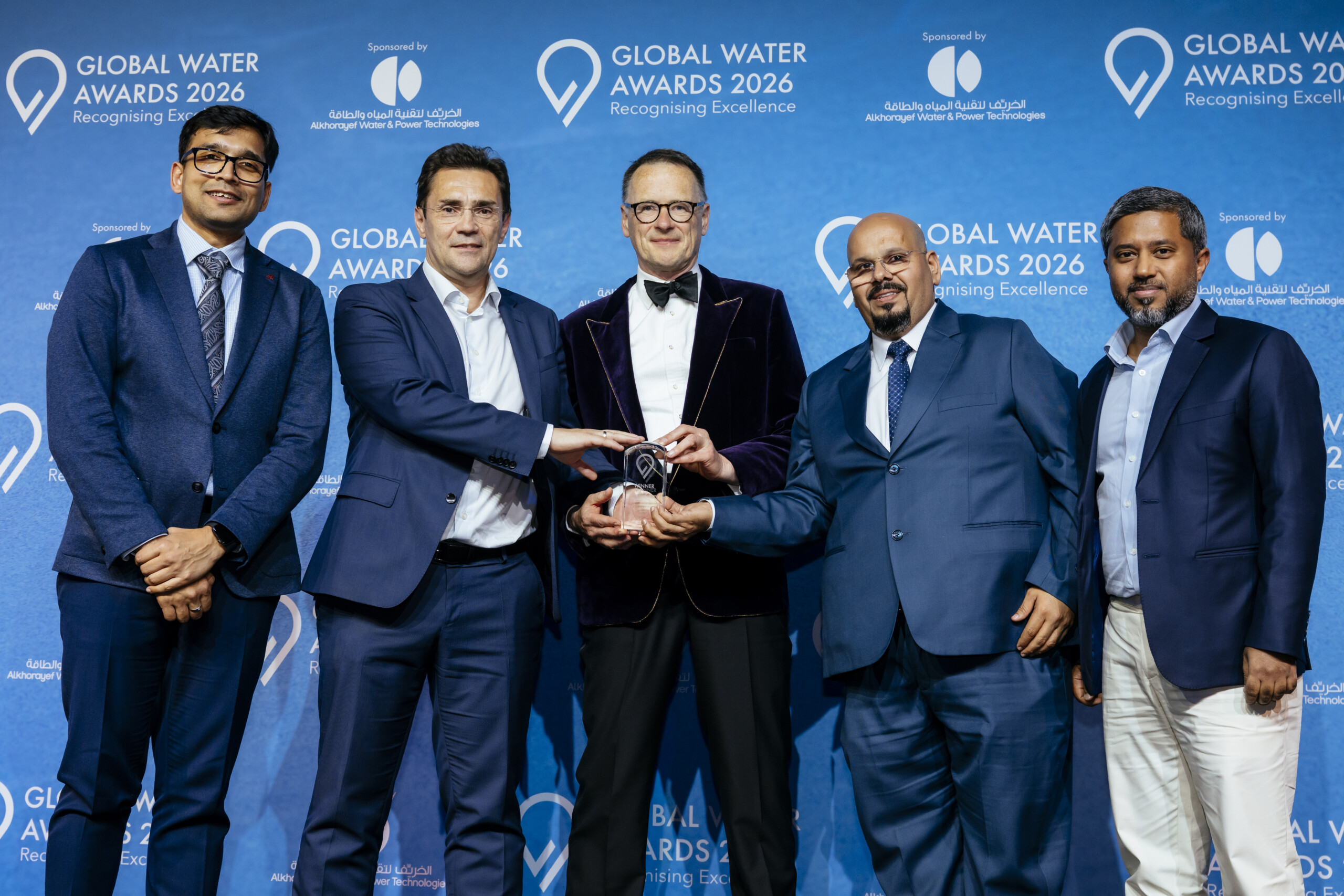
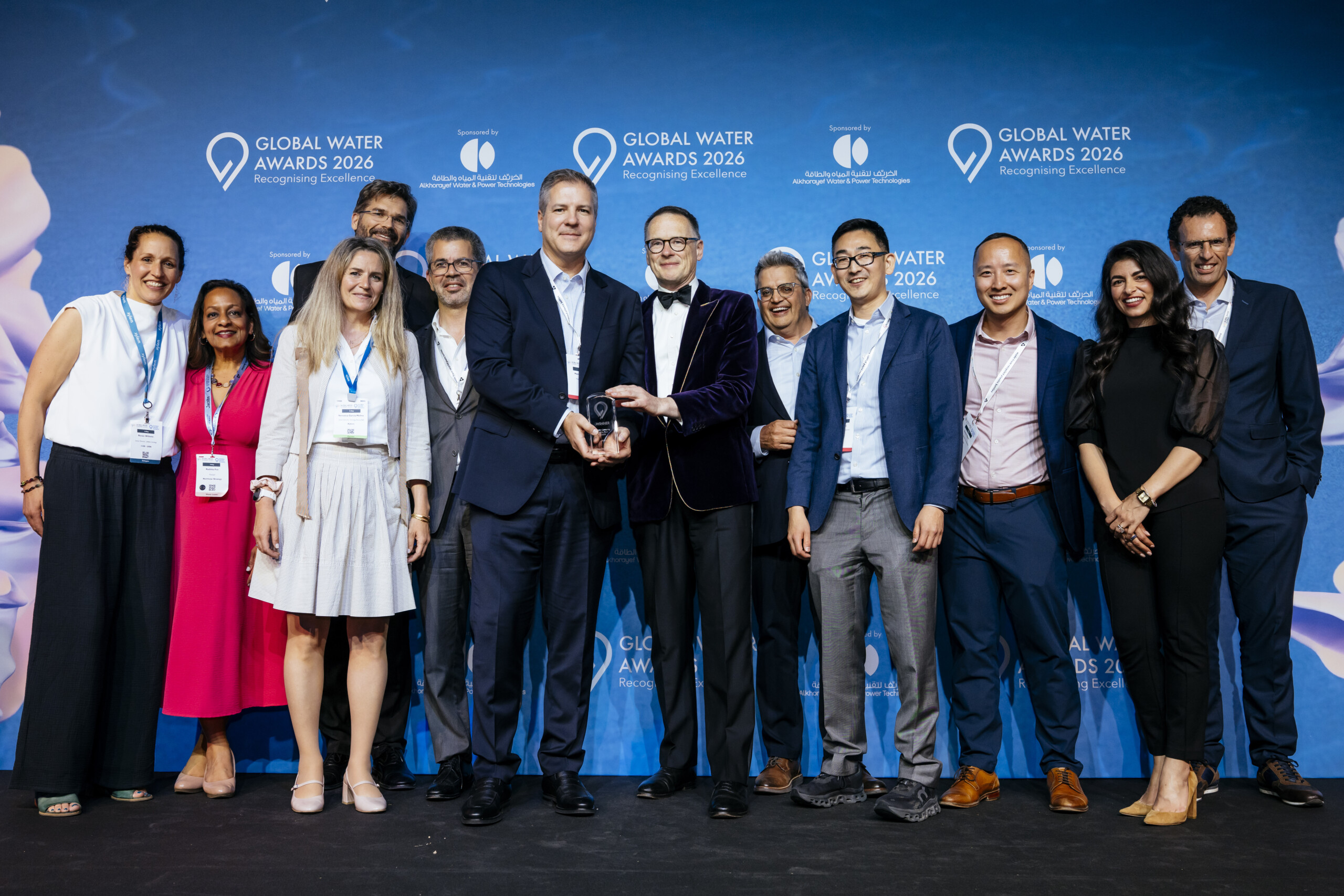
Water Company of the Year

For the water company that made the most significant contribution to the development of the international water sector in 2025.

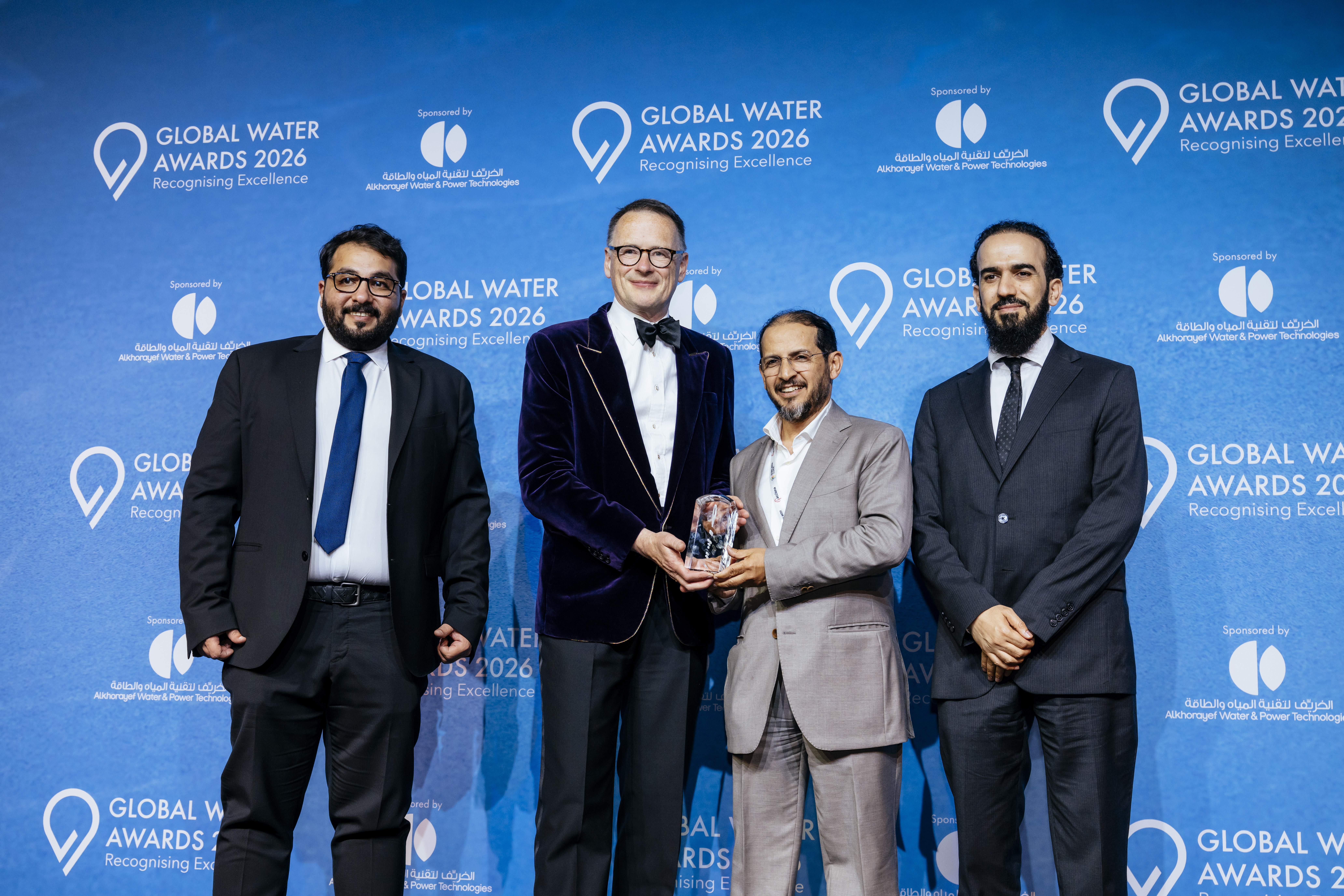
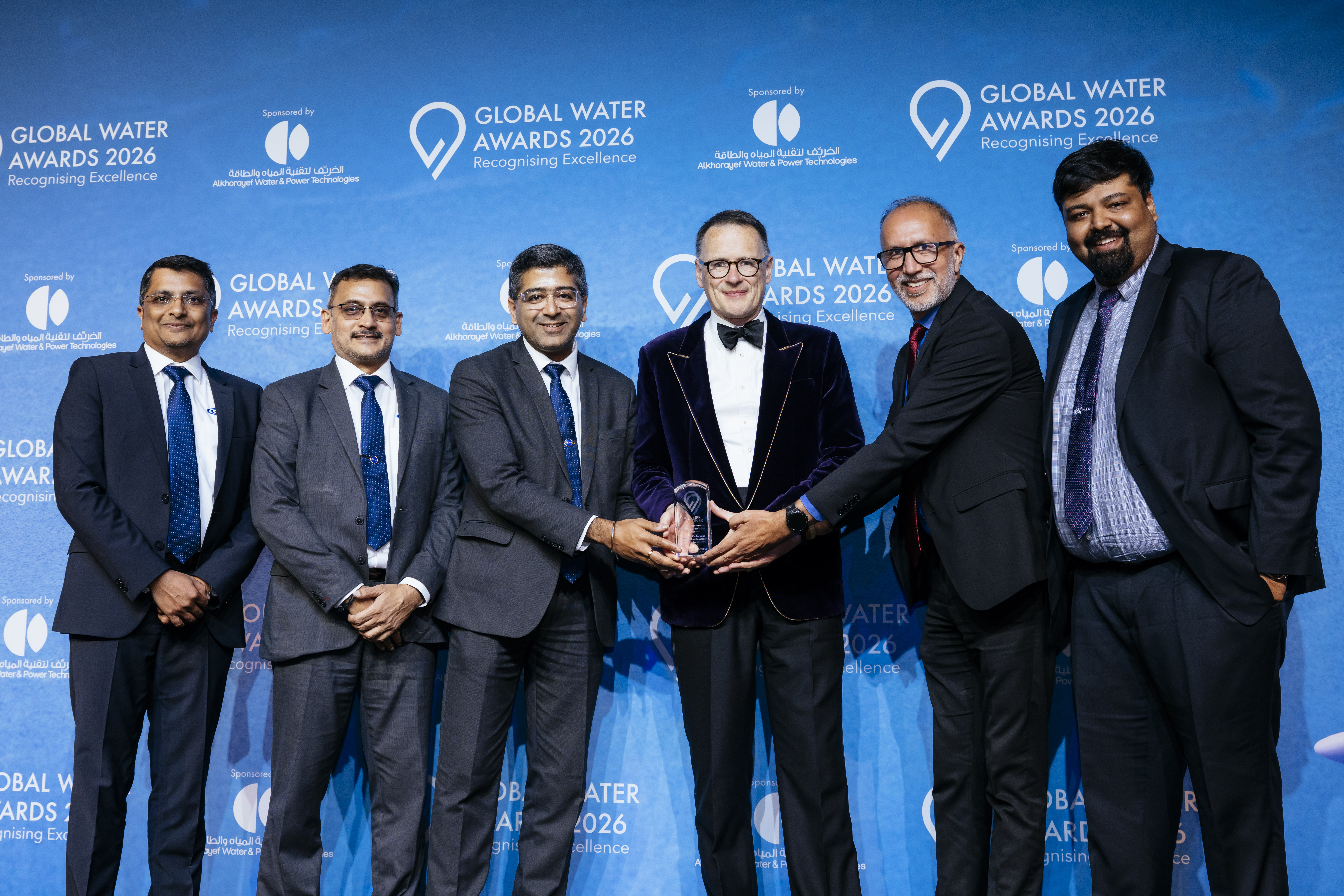
Winner Xylem

Xylem Visit

"Doubled down on sustainability when everyone stepped back."

What is it?

23,000 people driven by an infectious excitement about building a secure world. Active across water management where innovation matters most: treatment and transport, analytics and metrics, municipal solutions, and industrial systems.

What has it done?

The company has consistently outperformed expectations since its $7.5 billion acquisition of Evoqua in 2023, with 2025 delivering the first full year of synergies. The group has evolved from a technology company into an innovation ecosystem: Xylem Innovation Labs supports 60 start-ups and works with 40 partners, backed by a $50 million commitment. At the same time, its long-term investment in digital paid off in 2025 with the vendor-agnostic Xylem Vue platform, which doubled its revenue during the year.

What makes it special?

  • The world needs a water platform like Xylem: global in reach and an aficionado of customer needs. It sends a message to entrepreneurs everywhere: “if you have something great, it will do ten times better if you plug it into Xylem.”
  • Xylem doesn’t just sell intelligent solutions; it shapes the future of water through thought leadership that influences cities and industry.
  • While many corporates stepped back from their sustainability commitments in 2025, Xylem doubled down, offering a rare sign of integrity and deeply embedded values.
Read

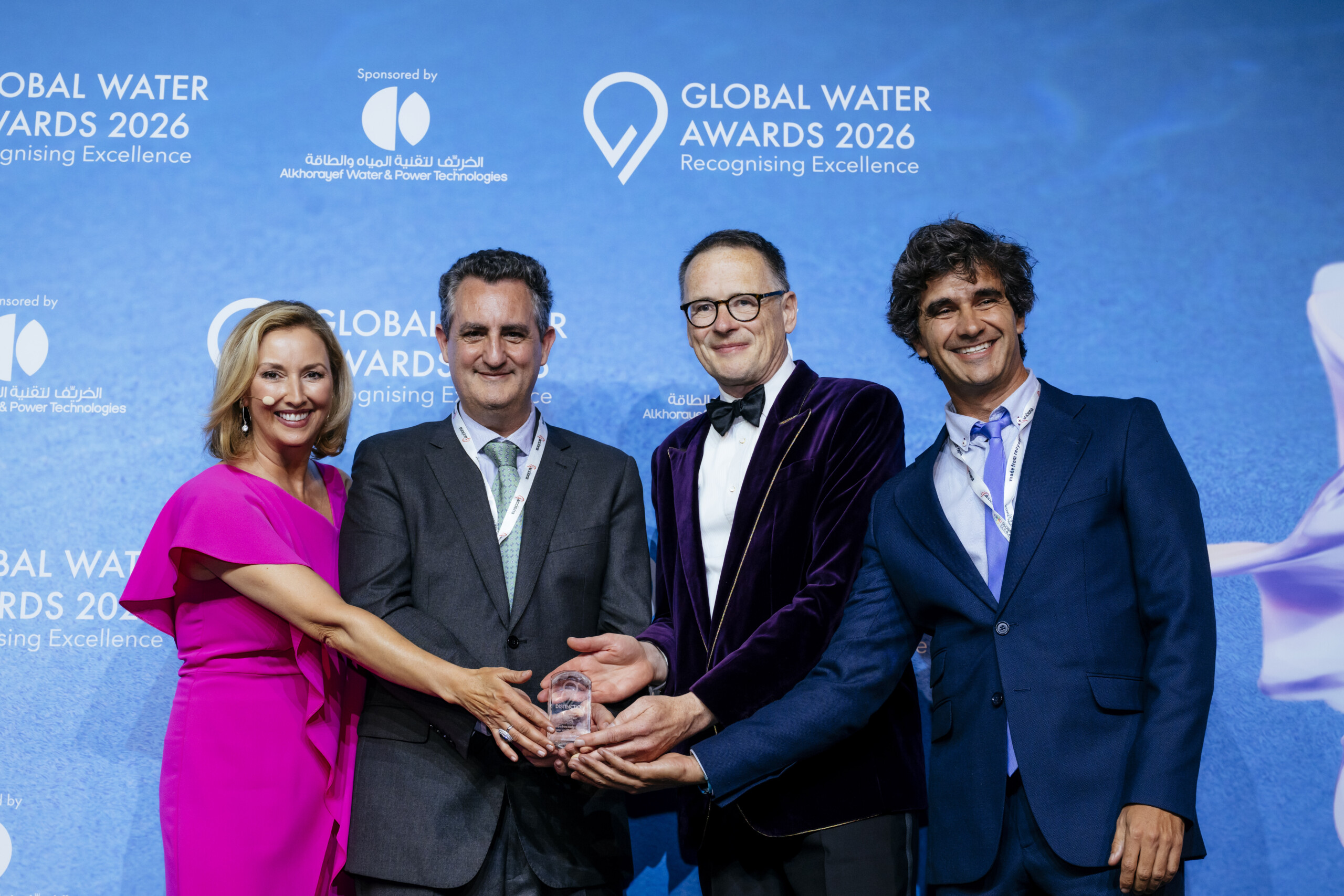
Distinction Miahona

Miahona Visit

"Furnace of competition, extraordinary culture of excellence."

What is it?

A Saudi project developer and operator treating 841,500m³/d of wastewater, supplying 107,000m³/d of fresh water, and serving over eight million people through management contracts. Under Awaadh Al Otaibi, it has stepped out of Acwa’s shadow, floating on the Riyadh stock exchange in 2024, and going international in 2025.

What has it done?

2025 was a stellar year for Miahona. Revenues grew 82% to $187 million, while the biggest breakthrough came in September when the company signed two development agreements in Uzbekistan. Miahona also undertook a strategic rebrand, clarifying its commitment to long-term shared value creation.

What makes it special?

  • The Saudi wastewater sector is a furnace of competition that has incinerated the ambitions of less able developers. Miahona’s extraordinary success in 2025 is a tribute to its unique culture of excellence and entrepreneurialism.
  • The Saudi Vision 2030 is almost insanely demanding in what it expects from the Kingdom’s water sector. In 2025 Miahona showed that it has what it takes to deliver under that kind of pressure.
  • Is there another company in the global water market today that can match Miahona’s access to capital and its ability to deploy it efficiently to create value for customers and shareholders alike?
Read

Desalination Company of the Year

For the company that made the greatest overall contribution to the desalination industry in 2025.

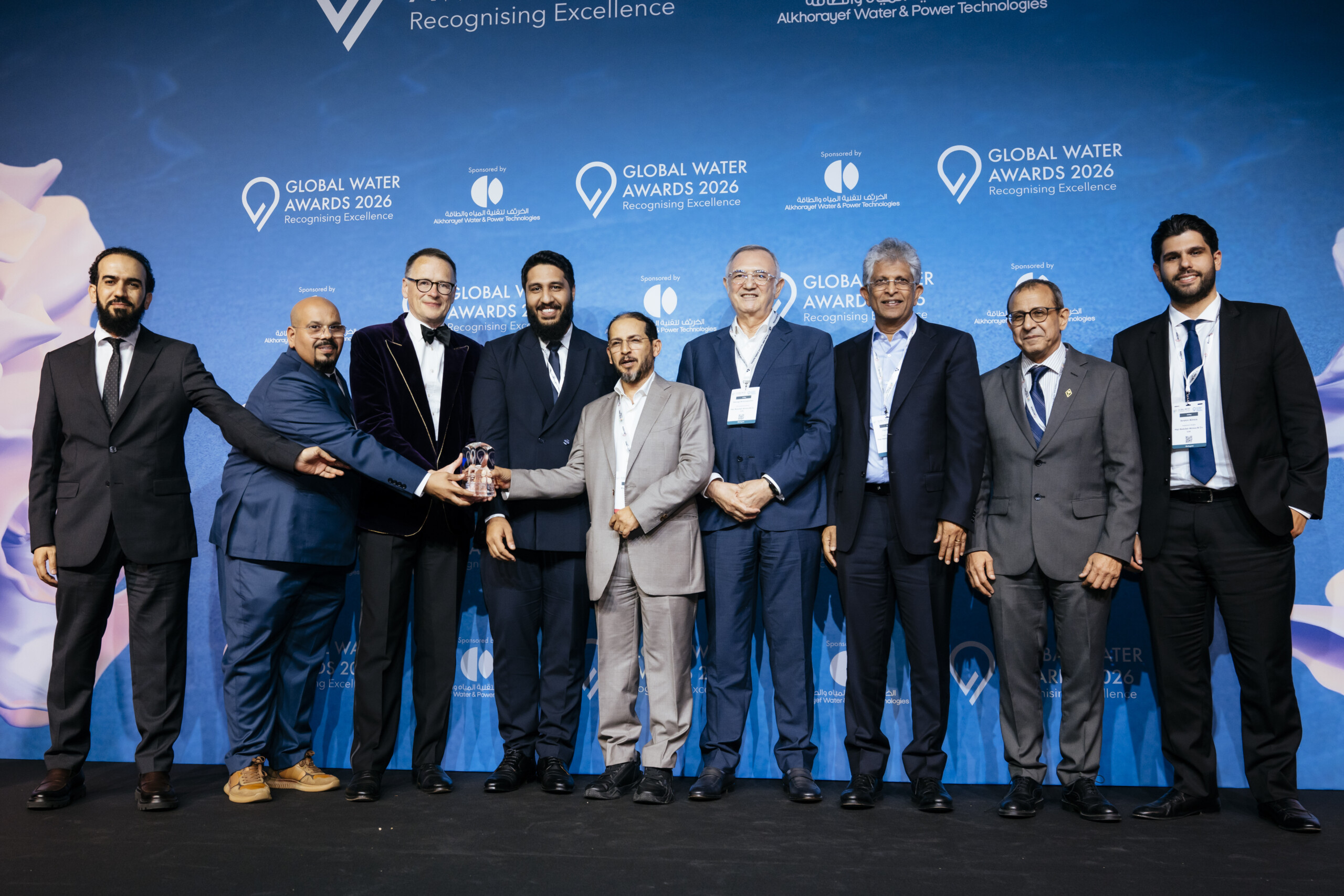
Winner Acwa

Acwa Visit

"Pre-eminent developer driving down the cost of water."

What is it?

A Saudi desalination and power project developer with a portfolio of 9.3 million m³/d of seawater desalination capacity, tackling water scarcity at scale for over two decades.
What has it done?

2025 was a landmark year for Acwa. It successfully commissioned the Shoaiba 3 IWP, Saudi Arabia’s first large-scale MSF-to-RO conversion, while securing Ras Mohaisen, the sole major Gulf IWP to reach financial close last year. Its international portfolio blossomed with new projects in Senegal and Azerbaijan.

What makes it special?

Acwa stands at the forefront of a new paradigm in global desalination, one where the GCC exports rather than imports world-class expertise. Building on an SWRO project win in Azerbaijan, Acwa notched up Senegal’s first desalination mega-project at Grande Côte.

The successful commissioning of Saudi Arabia’s first large-scale MSF replacement plant at Shoaiba 3 marks the largest such conversion anywhere in the world. It sets the gold standard for all future thermal-to-RO conversions in the GCC.

Acwa’s win at Ras Mohaisen was complemented by the signing of a water purchase agreement for Kuwait’s latest IWPP at Az Zour. In an increasingly competitive environment, the company’s role in driving down the cost of desalinated water has ensured its lasting reputation as the region’s pre-eminent desalination developer.

Read

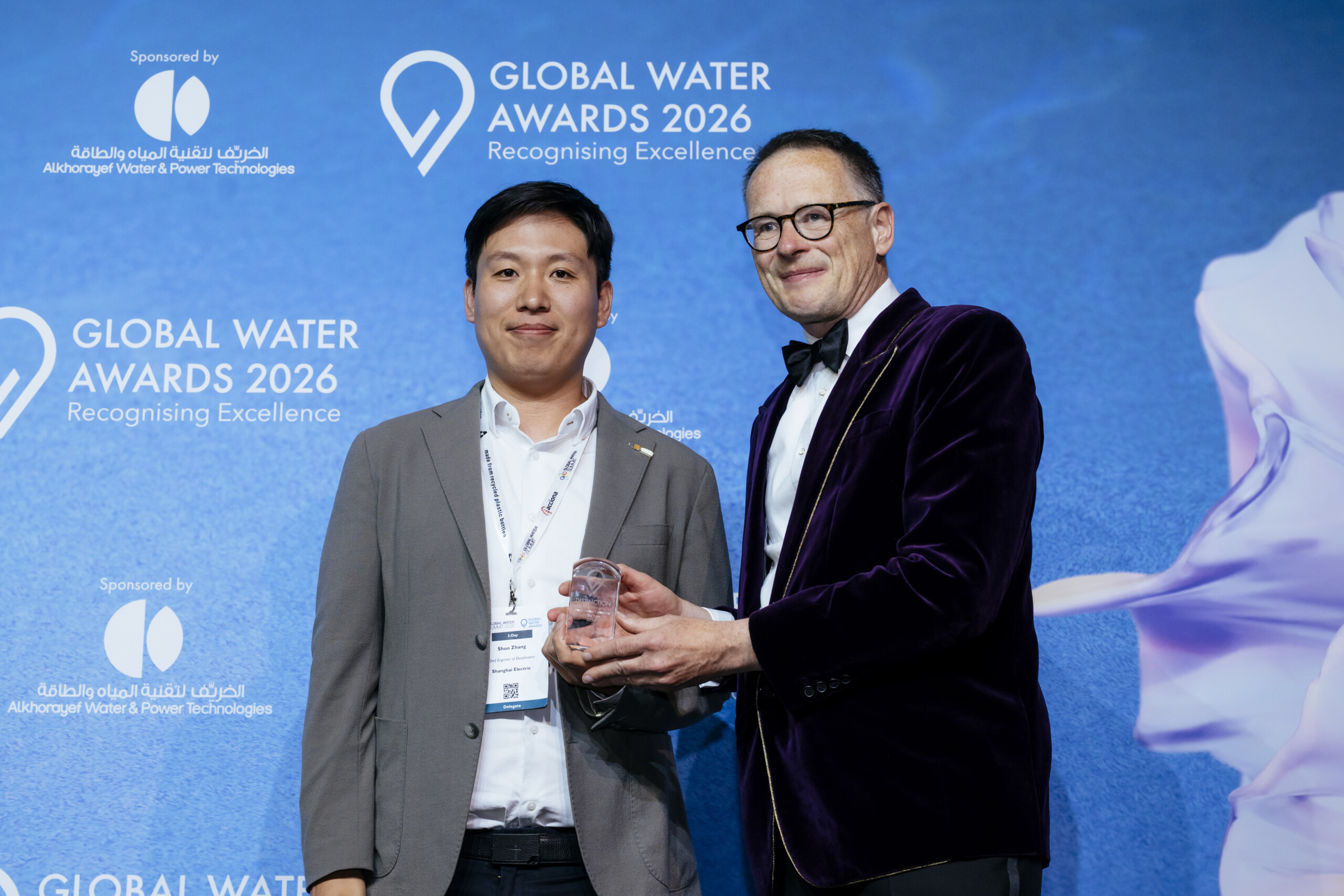
Distinction Shanghai Electric

Shanghai Electric Visit

"Membrane and thermal: frontier mastered in one year."

What is it?

A Chinese energy and engineering group delivering large-scale seawater desalination and industrial water solutions through thermal, membrane, and hybrid systems, with 1.66 million m³/d of installed capacity.

What has it done?

In 2025 Shanghai Electric delivered milestone projects that illustrate its growing international ambition and domestic technological leadership. The award of the RO membrane systems contract for Morocco’s landmark Safi Wave 2 project was complemented by the completion of the Yulong F-MED-RO plant, establishing a world first in industrial hybrid desalination.

What makes it special?

Shanghai Electric represents the vanguard of a new paradigm reshaping the global desalination landscape: as thinning margins and escalating project risk deter established Western contractors, Chinese companies’ greater appetite for risk and lower return thresholds are enabling them to capture market share at scale.

The Yulong Petrochemical F-MED-RO plant is the world’s first industrial-scale application of Shanghai Electric’s proprietary Flash MED technology. By harnessing lower-grade industrial waste heat to both drive thermal desalination and maintain consistent RO feedwater temperatures year-round, the company demonstrated an innovative new take on a technology many had written off.

While most large-scale desalination contractors are effectively pure-play SWRO specialists, Shanghai Electric demonstrated in a single year its ability to operate at the frontier of both membrane and thermal technology – on opposite sides of the world

Read

Water Technology Company of the Year

For the company which made the most significant contribution to the field of water and digital technology in 2025.

Winner Haskoning

Haskoning Visit

"Nereda, Ephyra, Aurea: outcompeting MBRs globally."

What is it?

A Netherlands-based international engineering consultant with an innovative water technology and software development arm.

What has it done?

Haskoning moved the needle in wastewater treatment beyond its Nereda solution, as 2025 saw it secure new references for its Ephyra sludge technology, while also achieving its first full-scale Aurea installation for micropollutant removal. Nereda continued to conquer new markets by outcompeting membrane bioreactors, while Haskoning’s Aquasuite digital solution is driving impact at some of the world’s leading utilities.

What makes it special?

Ephyra is shaking up the anaerobic sludge digestion market, offering a compelling retrofit option for ageing digesters as disposal costs rise. The reference base surged past 20 projects in 2025, with maiden contracts signed in North America and Italy, amid growing interest from Brazil and the Middle East.

Haskoning continues to push the well-established Nereda technology, pairing it with ultrafiltration to compete successfully in tenders that heavily favour MBRs. Wins in Brazil, Australia, and the Middle East demonstrate that Nereda continues to unlock new opportunities.

Haskoning’s co-creation model with its partner network is unparalleled, effectively combining technology development with an expansive route to market for new product launches. This foundation is already enabling faster adoption for solutions like Ephyra.

Read

Distinction Kurita

Kurita Visit

"Lithium, PFAS, space: tomorrow's challenges, mastered today."

What is it?

A Tokyo-listed Japanese water technology, chemicals, and services giant.

What has it done?

In 2025, Kurita brought its decades of water expertise to bear in new markets, accelerating solutions for lithium recovery and PFAS removal, while striking agreements to develop water treatment solutions for space missions. It accomplished this while effortlessly maintaining its focus on core markets by introducing off-the-line ultrapure water systems to cut EPC lead times.

What makes it special?

Few companies understand the needs of ultrapure water customers better than Kurita. By leveraging digital solutions for design automation and operational optimisation, it has made systems more accessible with its off-the-line e-WT UPW system. By connecting pipes and electricity between modular units, its software enables ultrapure water production to ramp up in double-quick time.

In 2025, Kurita backed multiple innovative third-party technologies to tackle the PFAS challenge. It will accelerate the adoption of FREDsense’s rapid PFAS testing kit, and apply its engineering capability to support Cyclopure’s adsorbent media, reducing treatment costs and improving compliance.

While delivering value on today’s challenges, Kurita remains primed for tomorrow’s opportunities. A landmark deal will see it deploy membrane-based direct lithium extraction with Evove for the UK’s first commercial-scale DLE plant – placing it at the cutting edge of the clean energy transition.

Read

Breakthrough Technology Company of the Year

For the early-stage technology company which made the most impressive commercial breakthrough into the global water technology market in 2025.

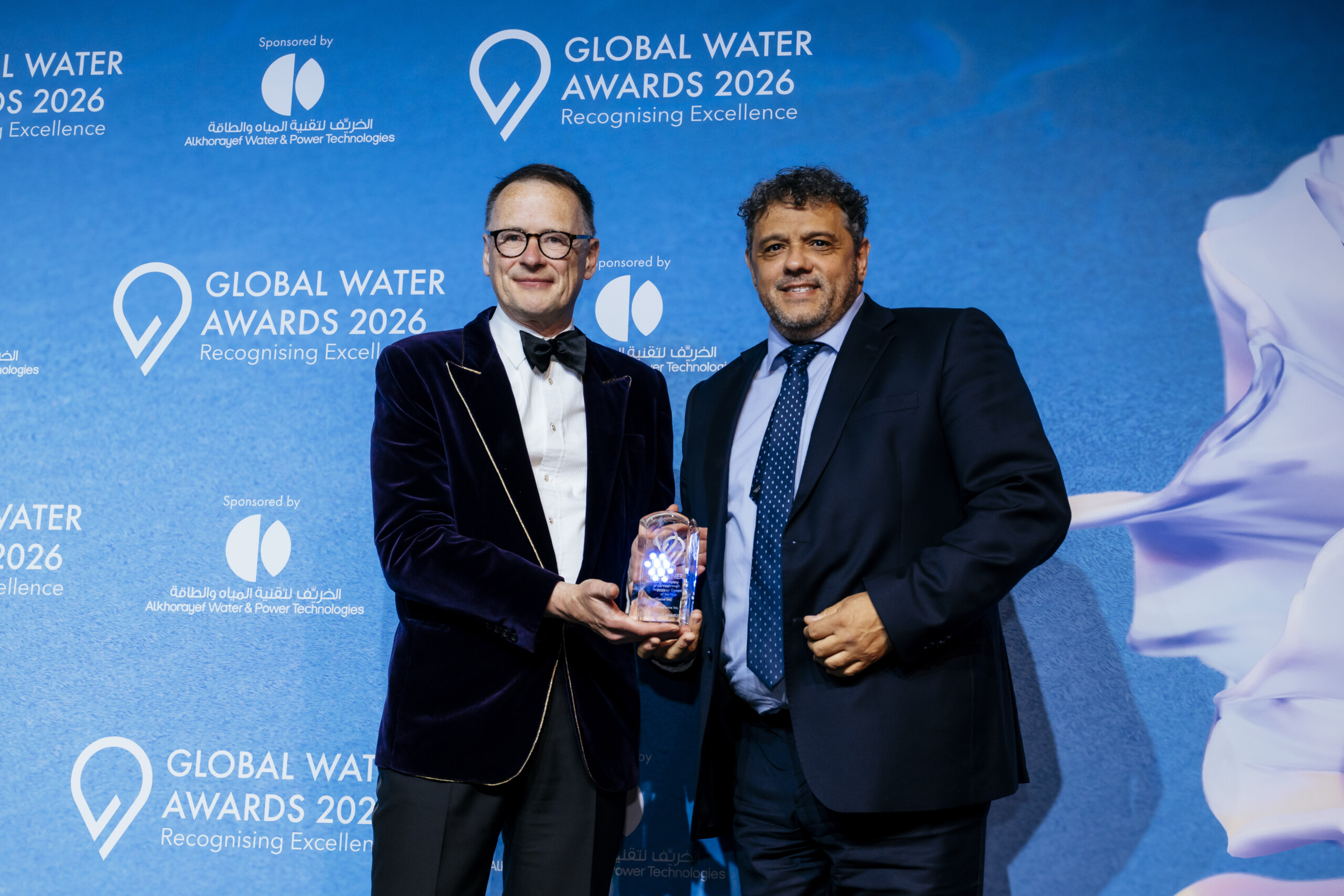
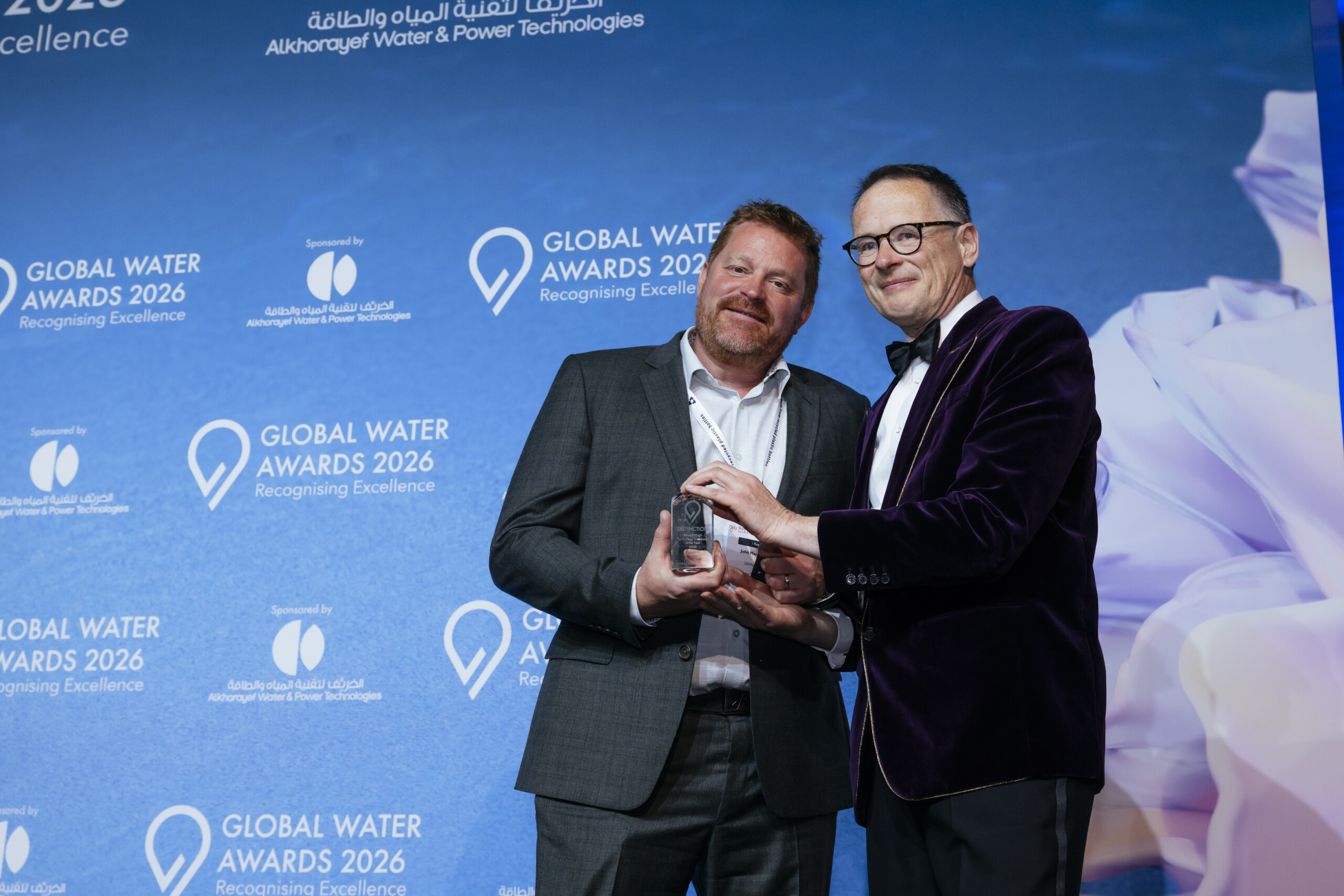
Winner AquiSense Inc.

AquiSense Inc. Visit

"UV-C LED enters the municipal mainstream."

What is it?

A Kentucky-based provider of UV-C LED disinfection systems for water treatment.

What has it done?

In 2025, AquiSense broke new ground in larger-scale municipal and industrial projects, proving that UV-C LED is a viable alternative to UV mercury lamps. AquiSense sold systems to utilities in the UK, Norway, and the US, and secured the world’s first full-scale UV-C LED installation in a beverage plant, helping it to double revenue and become profitable.

What makes it special?

AquiSense has brought UV-C LED into the municipal mainstream, delivering the world’s first full-scale wastewater project using the technology, and securing a repeat order from Las Vegas Valley Water District. As concerns grow over the availability of mercury-based equipment, UV-C LED is rapidly becoming the smart choice for utilities to future-proof their assets.

AquiSense’s systems have reached capex and opex parity with medium-pressure UV lamps in many applications, meaning adoption is no longer solely reliant on the regulatory-driven phase-out of mercury-based systems.

With an existing installed base of low-flow systems worldwide, nobody has mastered UV-C LED technology as well as AquiSense, which has positioned itself as the spearhead of the revolution in water disinfection.

Read

Distinction Origin Tech

Origin Tech Visit

"Seal any leak in under twenty minutes."

What is it?

A UK-based provider of leak detection and trenchless pipe repair technologies.

What has it done?

Origin Tech changed the game in leakage management in 2025, securing several commercial deployments for its Find and Fix leak detection and trenchless repair solution in the UK, while also expanding into Europe. Its No Dig repair solution hit new heights, and the Orbit satellite solution was rolled out to new markets – all backed by a £10 million investment.

What makes it special?

The Origin No Dig product line directly addresses the long-standing challenge of disruptive and costly pipe repairs, enabling utilities to seal leaks in under 20 minutes without excavation. Its food-grade calcium carbonate-based product has made even small leaks cost-effective to fix, helping to meet ambitious leakage targets.

Pairing the No Dig technology with satellite leak detection is a formidable combination, as pinpointing the leak is unnecessary. No Dig fixes a leak in a pre-identified section of pipe, saving time, cost, and wasted dig efforts.

Origin is bringing the benefits of No Dig beyond customer-side pipes to help utilities quickly repair water mains: targeted development of the product for Severn Trent has shown No Dig to be suitable for fixing 94% of leaks. Origin is leading the shift towards smart, resilient, and sustainable water networks.

Read

Public Water Agency of the Year

For the governmental agency or public body that made the biggest difference to water and wastewater service provision and utility management in 2025.

Winner SHARAKAT

SHARAKAT Visit

"SAR 56 billion, bankable, repeatable, globally unmatched."

What is it?

Saudi Arabia’s central offtaker and project developer for water and wastewater infrastructure. Owned by the Ministry of Finance, it leads the Kingdom’s PPP model, procuring desalination, treatment, storage, and transmission capacity from the private sector. In a nation defined by scarcity, Sharakat is the engine turning ambition into delivered infrastructure at scale.

What has it done?

Sharakat has built one of the most active water infrastructure pipelines in the world. By 2025, its portfolio included 15 projects in operation, with 6 under construction, 8 in tendering, and 19 in planning.

What makes it special?

The group’s level of sustained procurement activity unmatched globally. This has been achieved while maintaining strong investor confidence. With around SAR 56 billion committed, Sharakat has consistently attracted international capital while delivering competitive tariffs and robust contractual structures.

Sharakat has set the benchmark for water infrastructure procurement. Its standardised PPP model delivers complex projects with speed, transparency, and consistency in a challenging global market.

Redefining the role of private finance in water — by structuring bankable, repeatable projects, Sharakat has unlocked sustained global investment at scale. The company operates with rare strategic clarity. Its pipeline is not just large, but coordinated, ensuring desalination, treatment, and storage develop as a single system for national water security.

Read

Distinction Orange County Water District, United States

Orange County Water District, United States Visit

"Three years: zero imported water purchased."

What is it?

Orange County Water District safeguards one of the most heavily used groundwater basins in the United States, securing supply for 2.5 million people.

What has it done?

Operating in a region exposed to drought and import risk, OCWD has built a system that combines recharge, advanced treatment, and long-term planning into a single, resilient supply model, reinforcing its position as the global reference point for potable reuse.

What makes it special?

In 2025, its Groundwater Replenishment System produced 118,000 acre-feet and surpassed 500 billion gallons since inception, recycling 100% of reclaimable flows into a dependable drinking water source. At the same time, it has responded decisively to emerging risks.

OCWD’s PFAS programme has returned more than 50 wells to service, supported by over $150 million in funding. Meanwhile, Forecast Informed Reservoir Operations has unlocked new stormwater supply without new infrastructure.

OCWD has achieved what few utilities can: local water independence. It has avoided imported water purchases for three consecutive years, shielding customers from cost and volatility. It moves from challenge to delivery with speed. From PFAS response to advanced reservoir operations, OCWD turns complex problems into implemented solutions with discipline and clarity.

Read

AI Project of the Year

A new category for 2026, for the most impressive use of Artificial Intelligence in the water sector over 2025.

Winner Shenzhen AI Leakage Control, China

Shenzhen AI Leakage Control, China Visit

"Mega-city loss rate: world-class benchmark achieved."

What is it?

The Shenzhen AI Leakage Control Project is a proactive, mega-city water loss management system serving 18 million residents across a 20,000km distribution network.

Who is involved?

Shenzhen Water and Environment Group is the client and developer, partnering with the Water Authority of Shenzhen Municipality, Alibaba Cloud, and Baidu.

What makes it special?

This project fundamentally shifts mega-city water management, transitioning Shenzhen from reactive reporting to proactive, AI-optimised intervention for infrastructure upgrades. Powered by over 3.5 million smart meters alongside a city-wide array of flow, pressure, and acoustic sensors, the AI ingests real-time data to pinpoint leaks with a scale and precision unattainable by human inspection.

The system’s true power lies in integrating machine learning with China’s largest urban hydraulic model. With over 1.6 million simulation nodes, the AI draws on 300,000 real-time monitoring points to cross-validate live data against predicted outcomes. This revolutionised emergency response, slashing the time to locate and repair leaks across thousands of DMA zones from 30 days to 10.

Ultimately, this integration delivered a critical breakthrough, with Shenzhen’s water loss rate dropping to 4.4% in 2025 after stalling at 4.6% for three years. Achieving the lowest rate among China’s first-tier cities, it sets a world-class benchmark translating to massive gains: conserving 3.5 million cubic metres of water a year.

Read

Distinction Tampa Bay Early Detection Water Quality Monitoring System, United States

Tampa Bay Early Detection Water Quality Monitoring System, United States Visit

"Two hours' warning before the plant knows."

What is it?

An intelligent platform capable of predicting turbidity levels, salinity spikes and red tide episodes, among other critical parameters, through monitoring data in the bay and open water prior to the intake of Tampa Bay Seawater Desalination Facility.

Who is involved?

Acciona, in collaboration with its technological partner SkyTL. Tampa Bay Water owns the desalination facility.

What makes it special?

The project analyses real-time data from both the bay and open waters, enabling the prediction and notification of incidents at least two hours before the instruments installed at the plant. This lead time allows operators to take proactive measures and avoid facility shutdown, maintaining efficient, safe, and reliable operation of the Tampa Bay desalination plant.

Machine learning analyses data from a dizzying array of information sources, such as weather, runoff, bay discharges as well as fixed cameras and drones. Acciona and SkyTL’s expert combination of ingesting diverse data and predictive algorithms provides a comprehensive view that enhances operational reliability and strengthens water security for the region.

The system also optimises chemical usage, extends equipment lifespan and reduces emergency repairs. With desalination becoming an increasingly important water security option, the platform is a huge step towards ensuring such facilities can continue to operate in the face of ever extreme climate events.

Read

Desalination Plant of the Year

For the desalination plant representing the most impressive technical or ecologically sustainable achievement in the industry, having entered its commercial phase in 2025.

Winner Shoaiba 3 IWP (SWRO Conversion), Saudi Arabia

Shoaiba 3 IWP (SWRO Conversion), Saudi Arabia Visit

"Largest thermal-to-RO conversion, delivered ahead of time."

What is it?

A 600,000m³/d seawater reverse osmosis desalination plant in Shoaiba, Saudi Arabia, supplying potable water to over three million people. It replaces a co-located MSF thermal desalination facility with a modern, renewables-integrated RO plant.

Who is involved?

The project was developed by a consortium of Acwa, Badeel/PIF, and Haji Abdullah Alireza & Co., with NOMAC acting as O&M contractor. The EPC work was contracted to Doosan Enerbility, with key technology contributions from Toray (RO membranes), Hyundai and Torishima (main process pumps), ABB (MV variable frequency drives), and LBP KSA (captive solar PV installation).

What makes it special?

The project is the largest conversion of thermal desalination capacity to reverse osmosis anywhere in the world. The project was delivered ahead of time, allowing the legacy MSF facility to be shut down 50 days earlier than planned, meaningfully accelerating fuel savings and carbon reduction.

The new plant powerfully showcases the step change in efficiency offered by a switch to membrane technology, delivering water at a tariff 45% lower than its predecessor, and saving over 22 million barrels of crude oil and 9.7 million tonnes of CO₂ annually. The project team also outperformed their contractual specific power consumption target by 4%, achieving 2.93 kWh/m³.

Read

Distinction Cap Blanc SWRO, Algeria

Cap Blanc SWRO, Algeria Visit

"Emergency programme bearing tangible fruit, fast."

What is it?

A 300,000m³/d seawater reverse osmosis desalination plant in Oran Province, Algeria, supplying water to around three million people. Commissioned in February 2025, Cap Blanc is the first of five new-build facilities completed under Algeria’s $2.4 billion national emergency desalination programme.

Who is involved?

The project was delivered by national civil engineering company GCB for the client and owner, Algerian Energy Company, with Hangzhou Water Treatment Technology Development Center (HWTT) acting as the systems integrator. Key equipment suppliers included DuPont (RO membranes), Energy Recovery (ERDs), and Andritz (high-pressure pumps).

What makes it special?

The first project to be commissioned under Algeria’s emergency desalination build-out, Cap Blanc is compelling proof that the programme is bearing tangible fruit. Delivered within 24 months of breaking ground, the project sets a benchmark for fast-track execution at scale.

Cap Blanc is a case study in the value of intelligently applied marginal gains. By repurposing the residual pressure in the RO concentrate stream to convey brine to elevated storage, the design team created a gravity-fed backwash system for the flap filters, eliminating dedicated backwash pumps and replacing fresh water backwash with concentrate, delivering a 2% improvement in water recovery. Further process optimisations contributed to a reported whole-plant SEC of 2.9 kWh/m³, reflecting disciplined, out-of-the-box thinking.

Read

Water Project of the Year

For the water project, commissioned in 2025, showing the greatest innovation in optimising its physical or environmental footprint.

Winner Upper Wawa bulk water project, Philippines

Upper Wawa bulk water project, Philippines Visit

"Single-point-of-failure risk: permanently, engineered away."

What is it?

A dam and bulk water delivery service creating an alternative strategic water supply for the East Zone of Manila, through the supply of up to 710,000m3/d of raw water, bolstering security for around 7.8 million people in the Philippine capital.

Who is involved?

The project was delivered and operated by developer WawaJVCo, a Prime Infrastructure-led joint venture that was later fully acquired by local offtaker and concessionaire Manila Water. The project was supported by regulator Metropolitan Waterworks and Sewerage System. Design and construction was led by PowerChina (dam and reservoir works) and PrimeBMD (pumping station and transmission).

What makes it special?

The project represents a colossal stride towards system reliability in one of Southeast Asia’s largest and most climate-exposed water systems. It backs up the Angat Dam system that had previously been the sole source for the region and represented a single-point-of-failure risk that was exposed in a major water shortage crisis in 2019.

It has also become a crucial measure in reducing the serious risk of floods for communities downstream in extreme weather events, with a structure designed to dissipate water energy, reduce turbulence and control downstream flow.

By replacing systemic vulnerability with engineered resilience, the project puts Manila on course to capably handle its expanding population and surging water demand, even as El Niño conditions look set to make a return this year.

Read

Distinction Surat advanced ultrafiltration plant, India

Surat advanced ultrafiltration plant, India Visit

"World's largest ceramic UF: PFAS-ready, future-proof."

What is it?

Phase one of a 160,000m3/d ceramic ultrafiltration (UF) facility, serving around 1.2 million people and installed as an upgrade to an existing 50,000m3/d river water treatment plant in Surat, India. It is the world’s largest ceramic UF installation, and removes long-chain PFAS compounds from drinking water sources.

Who is involved?

Enviro Control delivered the project as lead EPC contractor and was also responsible for design. Germany’s Cerafiltec supplied the ceramic membrane systems. The client was the Surat Municipal Corporation.

What makes it special?

As the first test for deploying ceramic UF membranes at this scale, the project sets a global benchmark for advanced water treatment, handling severe operational challenges with odour, colour, frequent filter choking from turbidity and algal blooms, as well as increasingly unreliable raw water quality levels driven by climate change.

The ability to handle PFAS at this scale makes the plant one of the first future-ready facilities in India, positioning it ready for future regulation in developing markets of one of the world’s most high-profile and pressing pollutants.

In completing a revolutionary plant overhaul within the same physical footprint, the project team relied on innovative reuse design strategies to deliver significant capex savings compared to developing a new plant in a dense urban area with near-zero land availability.

Read

Wastewater Project of the Year

For the wastewater project, commissioned in 2025, showing the greatest innovation in optimising its physical or environmental footprint.

Winner Digha and Kankarbagh integrated wastewater, India

Digha and Kankarbagh integrated wastewater, India Visit

"New scale of action for the holy river."

What is it?

An integrated wastewater programme, consisting of 150,000m3/d combined wastewater treatment capacity at two sites and a 450km sewerage network serving the Digha (100,000m3/d) and Kankarbagh (50,000m3/d) zones of Patna city, Bihar.

Who is involved?

VA Tech Wabag delivered the project as lead EPC contractor, and will operate for 15 years. The facility was tendered by the Bihar Urban Infrastructure Development Corporation (BUIDCO), as part of the Indian government’s Namami Gange river cleanup programme. Artelia was project management consultant.

What makes it special?

The integrated approach creates a tailored wastewater service that directly guarantees safe sanitation for around half a million residents in one of India’s most densely populated urban regions, and marking a huge step towards BUIDCO’s target of universal wastewater treatment coverage.

As one of the largest single contracts awarded under the Namami Gange programme, the project marks a new scale of action for reducing the uncontrolled discharge of sewage into the holy river. Arresting pollution at source, it dramatically improves water quality, public health, and the surrounding ecosystem all at the same time.

The complex contracting process combining directly financed design-build-operate (sewerage) and independently financed hybrid annuity model (sewage treatment) delicately balanced risk between contractor and client, while opening new sources of finance for one of the world’s most capital-heavy environmental efforts.

Read

Distinction The NICE project, Spain

The NICE project, Spain Visit

"Zero energy, minimal footprint, nature does the work."

What is it?

A multi-site programme deploying and testing nature-based solutions and their integration into the urban water cycle.

Who is involved?

Aqualia was responsible for the design and construction of key installations, in partnership with a string of research and academic institutions across the wider programme. The programme was backed by the EU through its Horizon 2020 research and innovation funding scheme.

What makes it special?

In 2025, Aqualia completed works on a series of key pilot-scale installations at sites across Spain, in Talavera, Algeciras and Benalmádena municipalities. The successful deployment of focused, multi-stage urban wetland schemes require minimal footprint and zero energy consumption to effectively filter wastewater from urban sites, in contrast to the energy-heavy established model for urban treatment.

Localised nature-based treatment elements can act as water storage facilities as well as water treatment elements; a key situation when urban areas are more exposed than ever to flooding and storm surges in increasingly unreliable climactic conditions.

The project is starting to take effect outside Europe: pilots in Cairo (Egypt) and Pereira (Colombia), show that nature-based solutions are not a luxury for wealthier European cities but a genuine part of the environmental struggle.

Read

Industrial Project of the Year

For the industrial project, commissioned in 2025, representing the most impressive technical or environmental achievement in industrial water and wastewater.

Winner Jafurah Desalination Project, Saudi Arabia

Jafurah Desalination Project, Saudi Arabia Visit

"500,000 barrels daily, 97.2% availability, zero compromise."

What is it?

A full-scope desalination and transmission system dedicated to Saudi Aramco’s unconventional gas operations at Jafurah. It supplies the field with 80,000m³/d of high-quality water through 200km of pipelines, supporting the Kingdom’s Vision 2030 strategy and setting a new standard for seamless integration of industrial water supply with upstream energy operations.

Who is involved?

Developed by a Mowah–Lamar–Albawani consortium, the project was executed by SEPCO as the EPC contractor, with IDOM providing detailed engineering design. TECTON supplied the major treatment equipment including electrochlorination, DAF, media filtration and two-pass RO. Endress+Hauser provided analysers and monitoring instrumentation.

What makes it special?

The deep infrastructure megaproject integrates desalination, long distance water and power transmission, and in-field distribution, supplying Aramco’s operations with 500,000 barrels per day of treated seawater.

The system delivers industry-critical reliability despite sharp swings in intake salinity and temperature, achieving 97.2% treated water availability. Redundant RO trains, advanced real-time monitoring, and 85,000m³ of storage capacity ensure a continuous and resilient supply of water to the field.

As one of the world’s first large-scale desalination systems purpose-built for unconventional gas development, it is enabling rapid development of the Kingdom’s energy diversification programme while protecting stressed groundwater resources.

Read

Distinction Salt Lake Lithium Extraction Project, Tibet

Salt Lake Lithium Extraction Project, Tibet Visit

"DLE at commercial scale, cold brine conquered."

What is it?

A 2,300m3/hr (55,200m3/d) expansion of a lithium brine project jointly developed by Sunresin New Materials and Tibet Guoneng Mining in Tibet, realising direct lithium extraction (DLE) at scale under challenging conditions.

Who is involved?

PSP.US provided ultrafiltration membranes and process design for the magnesium removal step, with PolyCera Shanghai as equipment supplier and technical execution partner. Sunresin New Materials supplied the adsorption and separation systems used for DLE and is responsible for plant operations.

What makes it special?

The project is an impressive demonstration of DLE at commercial scale. This second phase has more than doubled the total plant capacity to over 100,000m3/d, supporting the extraction of up to 60,000 tonnes per year of lithium salts to fuel the energy transition.

The Jieza Chaka Salt Lake mining area is a difficult environment, with winter brine temperatures dropping below 4°C. An integrated process ensures stable extraction from cold, high-pH, hypersaline brines, operating without conventional pretreatment to cut system complexity and operating costs.

Coupling membrane separation for magnesium removal with adsorption-based DLE provided a scalable blueprint for project expansion. The use of robust PolyCera Hydro-UF membranes tackled high levels of suspended solids while reducing energy consumption, aligning lithium production with sustainability objectives.

Read

Municipal Reuse Project of the Year

A new category for 2026, for the project delivered during 2025 representing the most significant advancement in terms of municipal water reuse.

Winner Saadiyat Sewage Treatment Plant 2 Upgrade, Abu Dhabi

Saadiyat Sewage Treatment Plant 2 Upgrade, Abu Dhabi Visit

"MBR upgrade: stringent standards met, expansion unlocked."

What is it?

A membrane bio-reactor (MBR)-based overhaul of the 9,750m3/d sewage treatment plant on Saadiyat Island in Abu Dhabi, delivering high-quality, reliable recycled water for non-potable purposes, meeting the stringent recycled water quality standards set by the emirate’s Department of Energy and allowing for safe, sustainable reuse on one of the key development hubs for the city.

Who is involved?

The project is owned and operated by Taqa Water Solutions. Veolia Water Technologies supplied and integrated its Zenon hollow-fibre MBR system.

What makes it special?

The integration of MBR to the plant’s capabilities allows it to effectively handle significantly higher flow rates while consistently meeting the stringent reuse standards, a crucial requirement in one of the rapidly growing emirate’s urban development hot-spots.

By creating a reliable source of recycled water for landscaping, district cooling and other non-potable applications across the island, the facility strengthens the water resilience of the ever-expanding city at a time when water resources are under unprecedented pressure.

The project also offers significant operating cost savings, reducing its energy footprint by up to 15%. It clears the way for a huge expansion in overall capacity for the plant as Saadiyat Island continues to expand and creates a scaleable blueprint for future reuse expansion in Abu Dhabi.

Read

Distinction Hofstade Water Production Center, Belgium

Hofstade Water Production Center, Belgium Visit

"Europe's first direct potable reuse, at utility scale."

What is it?

Europe’s first municipal direct potable reuse (DPR) facility treating around 1,300m3/d of wastewater at a facility in Hofstade (Aalst), Flanders. Treated wastewater is blended into the national grid, forming a new climate-resilient source of resource security in the water-stressed region.

Who is involved?

The facility was developed by Waterunie, the regional utility consolidated in 2025. Lead engineering for the plant was supplied by partner Nuoro, while equipment was provided by Aquafin (biological treatment) and DuPont Water Solutions (reverse osmosis and ultrafiltration modules).

What makes it special?

The project has made DPR a reality at utility scale for Europe, bringing a laggardly region into alignment with the most water-serious parts of the world in terms of technological expertise and regulatory flexibility.

The direct reuse credentials of the project are boosted by the inclusion of aquifer storage and recovery capabilities, forming a seasonal buffer that means water recycling can pay off at every point of the year, aligning production with demand and building system-level resilience in an area that suffers from wet winters and dry summers.

By offering a design that simultaneously satisfies water quality and carbon footprint requirements through judicious use of energy recovery, the facility offers a crucial template for advanced water recycling strategies throughout the European Union even in an environment of strict and tightening regulations.

Read

Water Stewardship Programme of the Year

For the corporate programme which has delivered the greatest benefit to nature and/or people through water stewardship endeavours in 2025. *Judged by the Corporate Water Leaders initiative.

Winner Cemex’s freshwater-free concrete initiative, Mexico

Cemex’s freshwater-free concrete initiative, Mexico Visit

"67% freshwater substitution: nine million people's daily needs."

What is it?

A pioneering initiative to phase out freshwater use in concrete production in Mexico by transitioning to alternative water sources. Cemex’s programme breaks new ground in collaboration among major water users, bringing together local stakeholders to repurpose industrial and municipal wastewater and reduce pressure on water resources.

What has it done?

Cemex championed numerous offtake agreements to achieve a 67% freshwater substitution rate across its Mexican sites in 2025, outperforming its annual target of 65% and saving the equivalent of the daily freshwater needs of 9 million people.

What makes it special?

Cemex has created a circular water ecosystem with major industrial and municipal water users, setting a new standard for collaboration to accelerate reuse. Partnerships to reuse the treated wastewater of global companies such as Danone and Coca‑Cola have helped reduce freshwater withdrawals and ease pressure on local aquifers.

Non-freshwater processes have been implemented at 61 additional sites in 2025, managing over 6 million litres of alternative water. 31 of these have been certified as ‘Zero Freshwater Concrete Plants’ by Spanish standards body AENOR.

Cemex doubled sustainable concrete production between 2024 and 2025, while achieving a 3% reduction in water consumption per cubic metre of concrete produced.

Read

Distinction California Water Resilience Initiative, United States

California Water Resilience Initiative, United States Visit

"Corporate funding galvanising California's 10% supply gap."

What is it?

A private sector-led initiative to reduce, reuse, and restore over 1.2 billion m3 per year of water by 2030, helping California address its projected 10% water supply gap by 2040. The California Water Resilience Coalition (CWRI) is co-managed by the Pacific Institute and LimnoTech, with primary support from General Mills, Ecolab and Niagara Cares, alongside over 20 other corporate partners.

What has it done?

The CWRI is aligning basin-level corporate engagement with public policy to deliver measurable impact. As of 2025, the initiative funds 70 projects which will deliver 683 million m3 per year of water benefits by 2030, contributing to water availability, ecosystem restoration and climate resilience.

What makes it special?

The CWRI is galvanising corporate commitments to resolve California’s water crisis. Corporate funding grew 38% year over year to $24.5 million in 2025, leading to 41 million m3 per year in volumetric benefits allocated to corporate funding.

Through public-private partnerships and innovative financing, the CWRI is coordinating to deliver enough water to meet the needs of 3 million households annually.

Tackling the supply gap on multiple fronts, the initiative combines nature‑based solutions like floodplain and meadow restoration with community measures such as urban stormwater projects, water efficiency upgrades, groundwater recharge and irrigation modernisation.

Read

Utility of the Year

A new category for 2026, for the utility that has made the most significant impact to water and wastewater service provision in 2025.

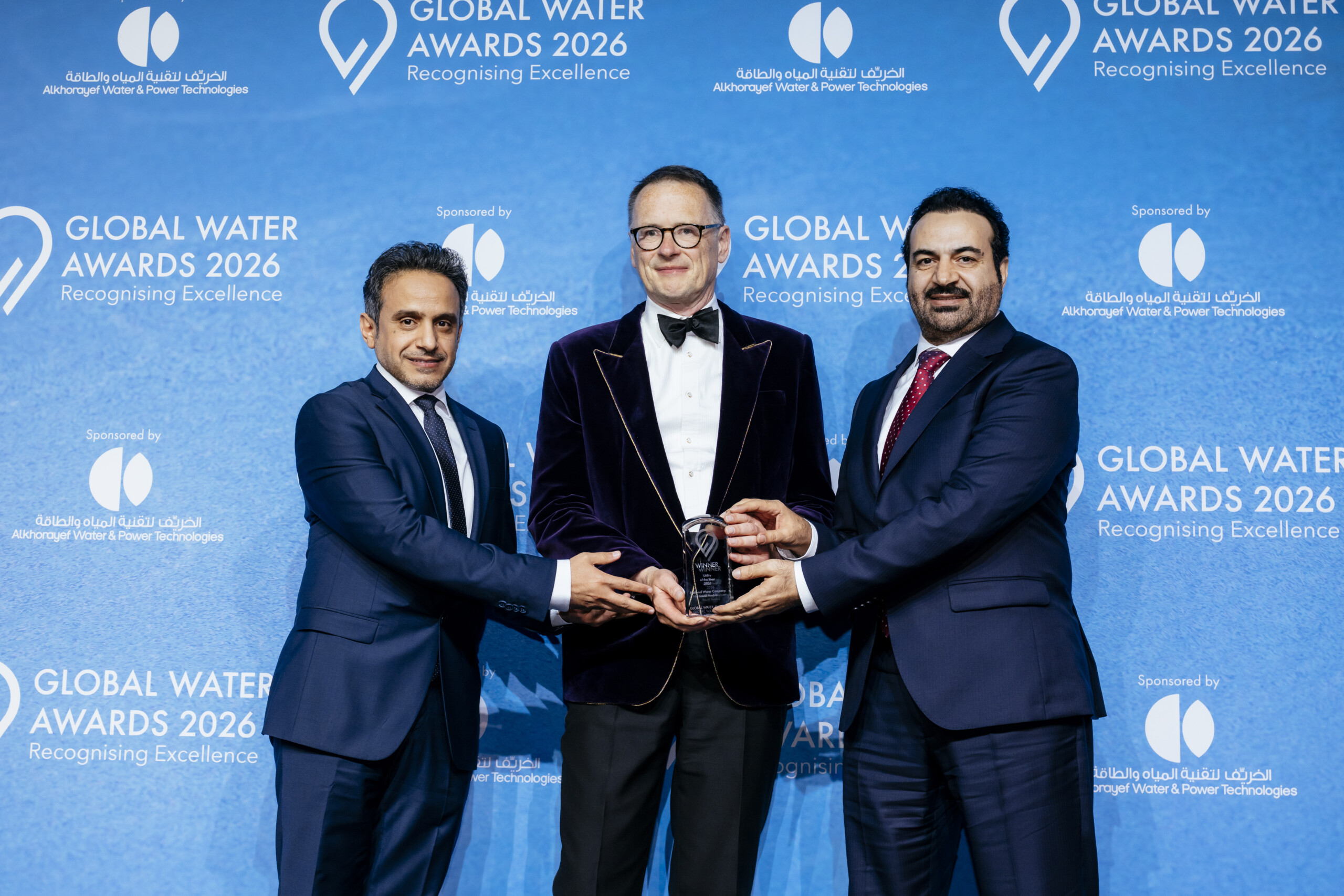
Winner National Water Company, Saudi Arabia

National Water Company, Saudi Arabia Visit

Transforming water quality at large scale."

What is it?

National Water Company is Saudi Arabia’s largest retail water and wastewater utility, delivering services across the Kingdom’s major cities. At the centre of national reform, it manages distribution and wastewater operations at scale, translating strategy into reliable service for millions.

What has it done?

NWC has delivered a step-change in water quality through its Water Quality Improvement Program in the Eastern Province. This $1.3 billion programme has replaced high-salinity groundwater with a fully integrated desalinated supply, serving more than 4.7 million people. The system delivers over 3.5 million m³/day through a 490 km transmission backbone. Salinity has been cut by over 90%, restoring trust in the tap while relieving pressure on non-renewable aquifers. At the same time, the network has been fundamentally re-engineered. A looped, digitally monitored system now enables continuous supply even during maintenance or disruption, marking a decisive shift from vulnerability to resilience.

What makes it special?

NWC has solved the problem at source. By eliminating reliance on degraded groundwater, it has secured long-term water quality and resource sustainability in a high-stress region. It has delivered infrastructure with intent. The move to a looped, intelligent network transforms reliability, ensuring consistent service under pressure. The impact is system-wide. By delivering high-quality water to all communities, NWC has closed the water quality gap and restored public confidence at scale.

Read

Distinction Sabesp

Sabesp Visit

"World's largest blue bond, fastest expansion at scale."

What is it?

Sabesp is one of the largest water and wastewater utilities in the world, serving more than 28 million people in São Paulo. Operating in a region defined by inequality and water stress, it sits at the centre of Brazil’s drive to universalise sanitation, combining public purpose with private discipline.

What has it done?

In 2025, Sabesp delivered one of the fastest service expansions seen at this scale. It extended water access to 1.8 million people, sewage collection to 2.1 million, and treatment to 3.8 million, putting São Paulo on track to achieve universal coverage by 2029. This expansion has been matched by financial strength. Sabesp executed a record investment programme and delivered the world’s largest blue bond, raising $1.5 billion and directly linking capital to water, sanitation, and climate outcomes.

What makes it special?

Sabesp has proved that scale is no barrier to speed. In its first full year under a new model, it combined rapid expansion with improved performance. Setting a new benchmark for water finance. Its blue bond and wider strategy align investment directly with measurable environmental and social outcomes. It is reshaping urban water security. By advancing reuse at scale, Sabesp is building resilience in one of the world’s most complex metropolitan systems.

Read

Industrial Reuse Project of the Year

A new category for 2026, for the project delivered during 2025 representing the most significant advancement in terms of industrial water reuse.

Winner Jeddah Industrial Cities Zero-Discharge Water Reuse Project, Saudi Arabia

Jeddah Industrial Cities Zero-Discharge Water Reuse Project, Saudi Arabia Visit

"Stranded asset transformed into circular utility provider."

What is it?

A zero-discharge water reuse system serving Jeddah Industrial Cities 2 and 3. The project brought a dormant wastewater plant back into service as a strategic utility capable of delivering up to 40,000m³/d of high-quality water to one of the region’s most dynamic industrial hubs.

Who is involved?

Tawzea Aquapor acted as concessionaire, engineering integrator and operations leader, delivering the project under a 25-year contract. SALFO & SAPL provided basic design, with civil and mechanical works carried out by multiple contractors. Tecofi supplied valves, KSB provided pumping systems, and Siemens delivered SCADA and metering.

What makes it special?

The project transformed a stranded, non-compliant treatment asset into a fully circular industrial water provider, integrating treatment, storage, and a dedicated distribution network. Serving over 700 industrial facilities, its modular design is already expanding to meet rising demand.

Upgraded treatment trains, including DAF, extended aeration and tertiary polishing to TSS of less than 1mg/L, deliver consistent quality. 72 hours of storage capacity and a 125,000m³/d pumping station ensure dependable service during peak demand.

The project provides a cost-effective alternative to energy-intensive desalination and stressed groundwater. Delivered in only 12 months, its integrated delivery, scalable approach, and long-term model will ensure resilience for Jeddah’s growing industrial base.

Read

Distinction Total Circularity at PetStar, Mexico

Total Circularity at PetStar, Mexico Visit

"60% reuse: closing the loop on plastic and water."

What is it?

A 550m3/d water treatment and reuse project at the world’s largest food-grade PET recycling facility, processing 5.5 million bottles annually. It recovers 370m³/d for reuse, advancing PetStar towards its goal of water neutrality while maintaining quality standards for recycled resin production.

Who is involved?

Veolia designed and delivered the project as engineering and procurement contractor, providing proprietary treatment technologies and chemical treatment services to optimise reverse osmosis performance. Operations and maintenance are managed in-house by PetStar, Mexico’s leading food-grade PET recycler, as part of its sustainability and circular economy commitments.

What makes it special?

The fully integrated water reuse solution enables circular water management in large-scale PET recycling, reducing reliance on freshwater resources and closing the loop on plastic and water.

A multi-stage treatment train integrates Veolia’s proprietary technologies, Densator rapid sedimentation, ZeeWeed MBR, PROflex reverse osmosis, Aquaray UV disinfection, and activated carbon, producing high-quality recycled water for uses from irrigation to boiler feed and process reintegration.

The project enables 60% water reuse at the facility, reducing freshwater demand in the water-stressed Valle de Toluca region. The 370m³ recovered daily equals about half the water consumption of the nearby San Cayetano Morelos community, delivering impact beyond the plant fenceline.

Read

SDG6 Champion of the Year

The most impactful SDG6 initiative implemented in 2025 by a member of the 300 Water Leaders. *Not open for public nominations.

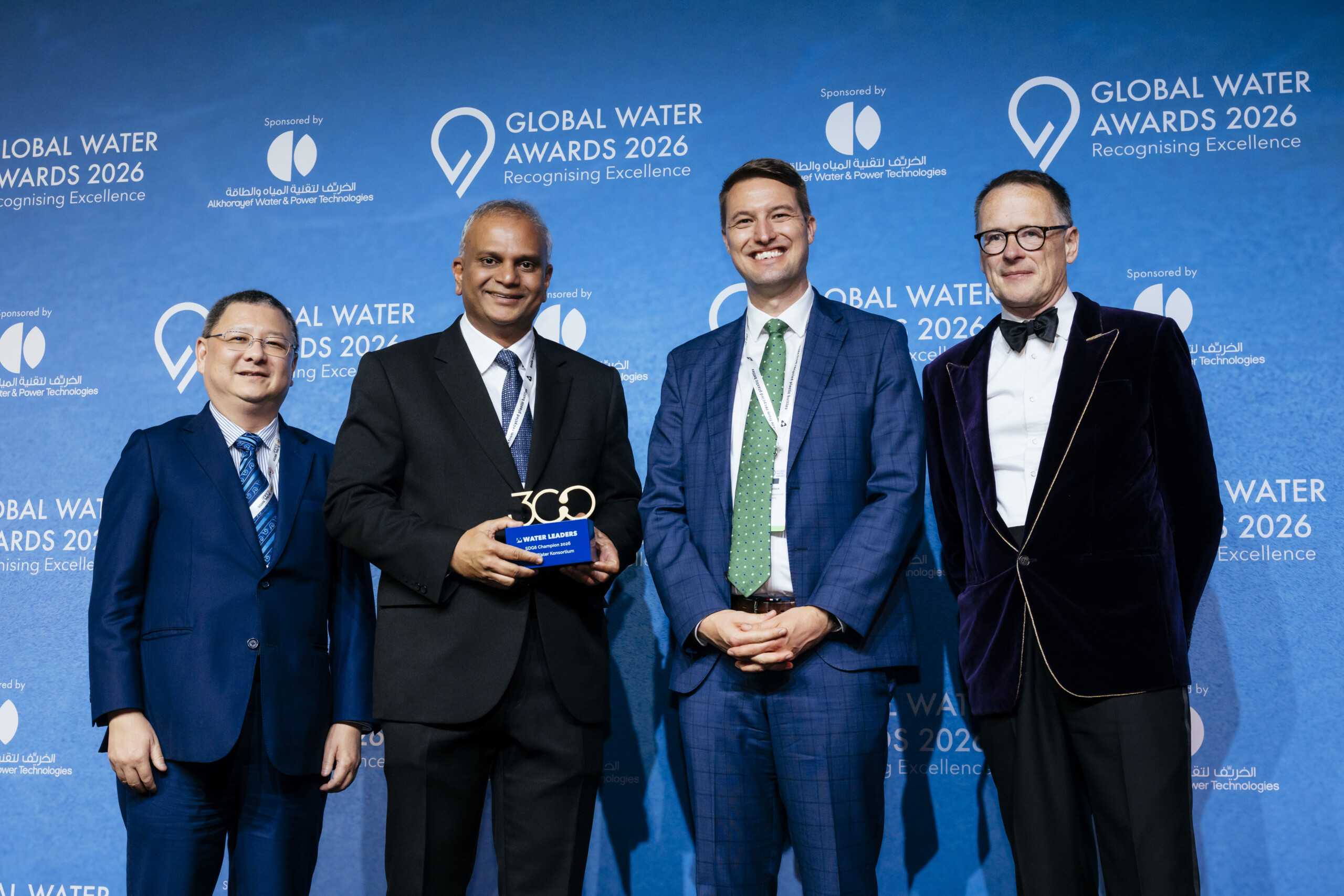
Winner Indah Water Konsortium (IWK), Malaysia

Indah Water Konsortium (IWK), Malaysia Visit

"Solar-powered sanitation: no upfront cost, cuts emissions."

What is it?

Indah Water Konsortium is the quiet force that keeps Malaysia healthy. As the national sanitation utility serving more than 30 million people, it meets its challenges with innovation and leadership, setting a global standard for sanitation management.

What has it done?

Indah Water has deployed solar energy across 16 sewage treatment plants through a performanceguaranteed PFI model. The programme delivers 6.3 MWp of capacity, generating 7,700 MWh each year to treat nearly 148 million cubic metres of wastewater. It secures reliable operations, avoids RM 41.8 million in grid costs, and cuts over 5 Gg of CO₂ annually.

What makes it special?

Indah Water has embedded renewable energy and financial sustainability at the heart of wastewater treatment. Through a pioneering PFI model it secured reliable energy with no upfront public cost. The programme cuts emissions, stabilises operations, and proves that sanitation performance can be strengthened through smart finance, not subsidy.

Read

Distinction Aguas Nuevas, Chile

Aguas Nuevas, Chile Visit

"45% to 30% NRW, 60 cities transformed."

What is it?

Aguas Nuevas is a regional water and wastewater services operator in Chile, providing drinking water and sanitation services across six highly diverse and water stressed regions, from the Atacama Desert to Patagonia. Operating through multiple subsidiary utilities, it combines private sector operating discipline with long term public service obligations, serving more than two million people under regulated concession frameworks

What has it done?

Aguas Nuevas has made astounding progress to reduce NRW, with levels reduced on average from 45% to 30% across 60 cities. It did this by recognising NRW reduction is not only a technical challenge but a strategic one. The initiative illuminates historically invisible water networks and transformed more than 90% of its network to be monitored remotely. The programme has reduced water losses totally 15 million m3 between 2015 and 2025. Repair times reduced from 10 days to less than 1 day – reinstating customer trust through reliable service.

What makes it special?

Aguas Nuevas proves that even in the face of extreme water stress – from the Atacama Desert to freezing conditions in southern Chile – strategic planning and stalwart programme delivery translates to operational excellence. This was not a pilot project but a full-scale organisational change that has protected its customers for years to come.

Read

Water Technology Idol

Voted live at the Global Water Summit 2026

Winner Soret Tech

Soret Tech Visit

Revolutionizing Thermal Fluid Refining

Presented by Felipe Torres, Founder & CEO at Soret Tech at the Water Technology Idol competition at GWS 2026

To view the presentation or find out more, reach out to the team at Soret Tech

Read